
Birds of Prey Barcelona
Private photography sessions in the best birds of prey hides in Catalonia, from a single morning to a full week.
Within reach of Barcelona, between the Pyrenees and the dry plains of inland Catalonia, there are hides where a Bearded Vulture lands close enough to fill the frame. We work with the best of them.
There's no fixed itinerary. You tell us which birds you dream of photographing and how long you can stay, and we take care of everything around it: the early starts, the right hide on the right day, and someone beside you who knows how each bird behaves.
Some mornings you'll spend hours with vultures squabbling a few metres away. Some afternoons will be about one fast, nervous hunter and the few seconds that make the whole session worth it.
14
species of birds of prey, from vultures to falcons
1:1
private sessions, planned around you and the season
€400
starting price, whichever birds you choose
Meet the birds
14 birds of prey, each with its own hide, its own season and its own character. Open any of them to see what makes it special, where it lives in Catalonia and what you can photograph from the hide.
Swipe or use the arrows to see all 14 birds.


5 photos
01 / 14
Trencalòs
Gypaetus barbatus
Spanish: Quebrantahuesos · Catalan: Trencalòs
Wingspan2.6–2.85 m
Weight4.5–7 kg
Status (IUCN)Near Threatened
In CataloniaAll year
About the bird
The only bird in the world that lives almost entirely on bone. It swallows pieces whole and carries larger bones up into the air to drop them onto rocks and break them. The rusty orange of the adults is not a natural pigment: they bathe in iron-rich mud and water to stain their feathers.
In Catalonia
The Pyrenees hold the largest population in Europe, and the Catalan side is a key part of it after decades of protection and supplementary feeding.
From the hide
From the feeding-site hides you watch adults and young birds land, pick up bones and stand their ground among vultures and ravens, often at short range.
2 photos
02 / 14
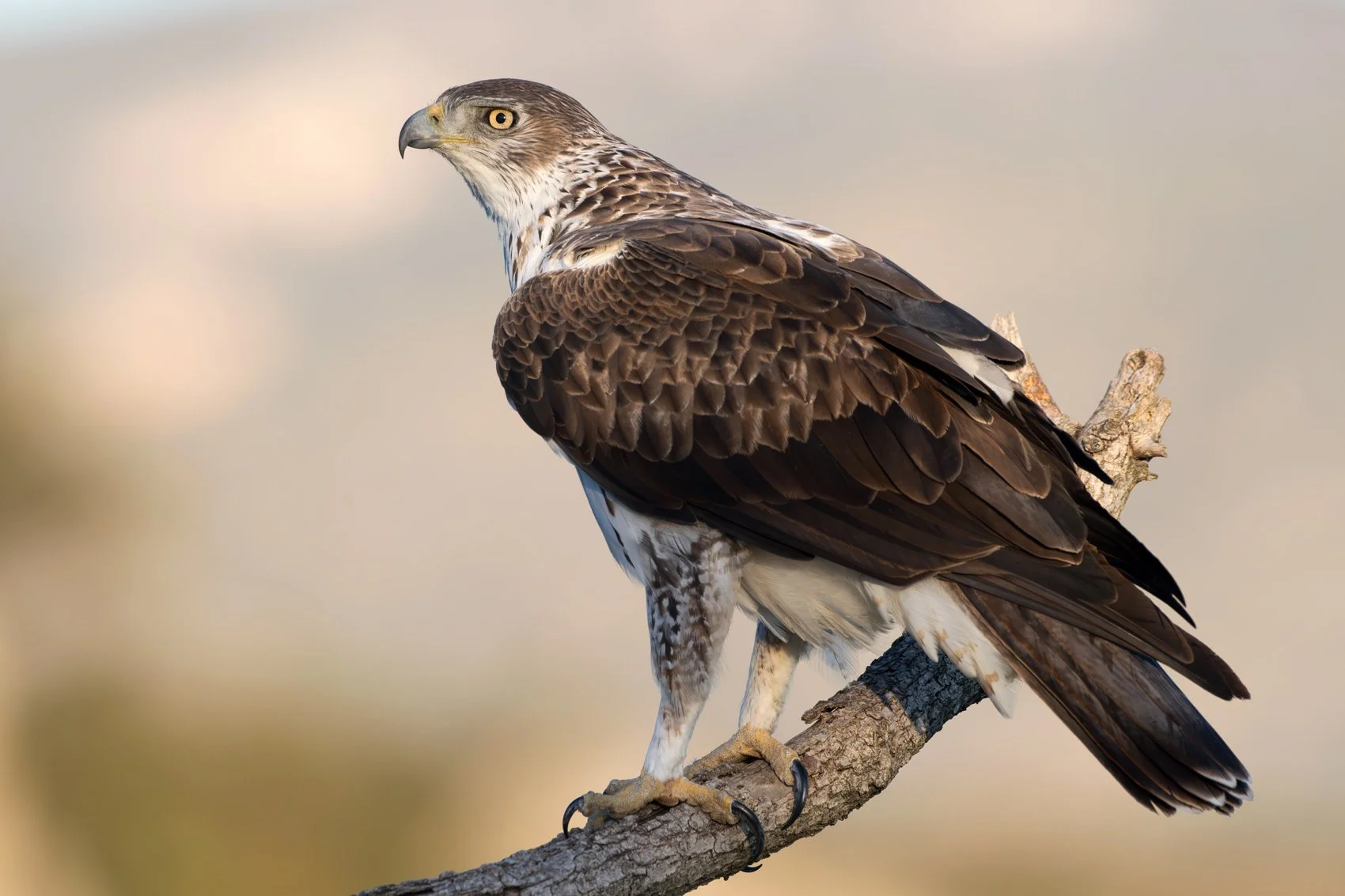
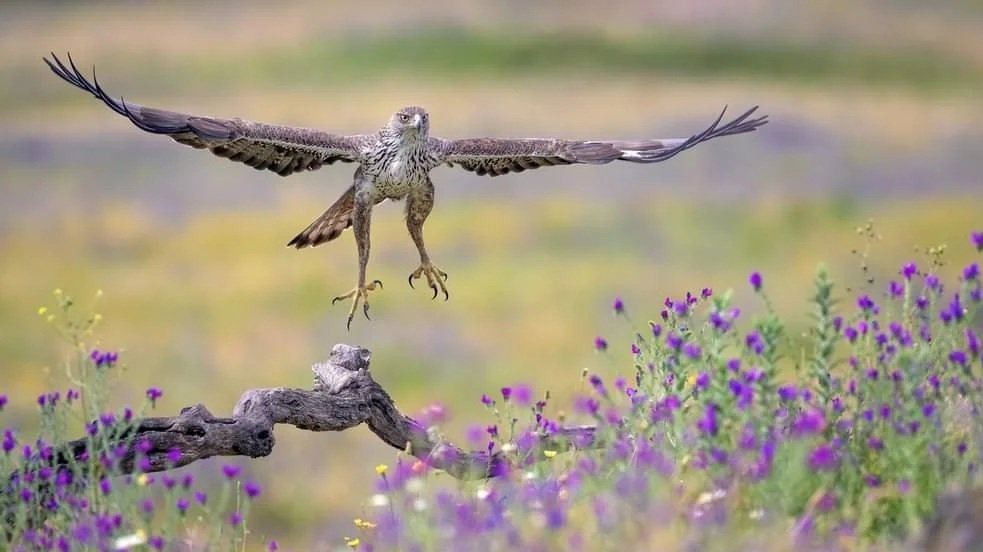
Bonelli's Eagle
Aquila fasciata
Spanish: Águila perdicera · Catalan: Àguila cuabarrada
Wingspan1.45–1.75 m
Weight1.5–2.5 kg
Status (IUCN)Least Concern globally, Vulnerable in Spain
In CataloniaAll year
About the bird
A compact, fast and powerful eagle of Mediterranean cliffs. Adults show pale underparts streaked with dark and a broad dark band at the tip of the tail. Pairs stay together all year and often hunt rabbits, partridges and pigeons in tandem.
In Catalonia
Most of Europe's population breeds in Spain. In Catalonia it nests on the cliffs of the pre-coastal and interior ranges, and it is one of the region's most threatened birds of prey.
From the hide
One of the rarest hide experiences in Europe: a wild Bonelli's Eagle landing in front of you, usually in beautiful Mediterranean light.


4 photos
03 / 14
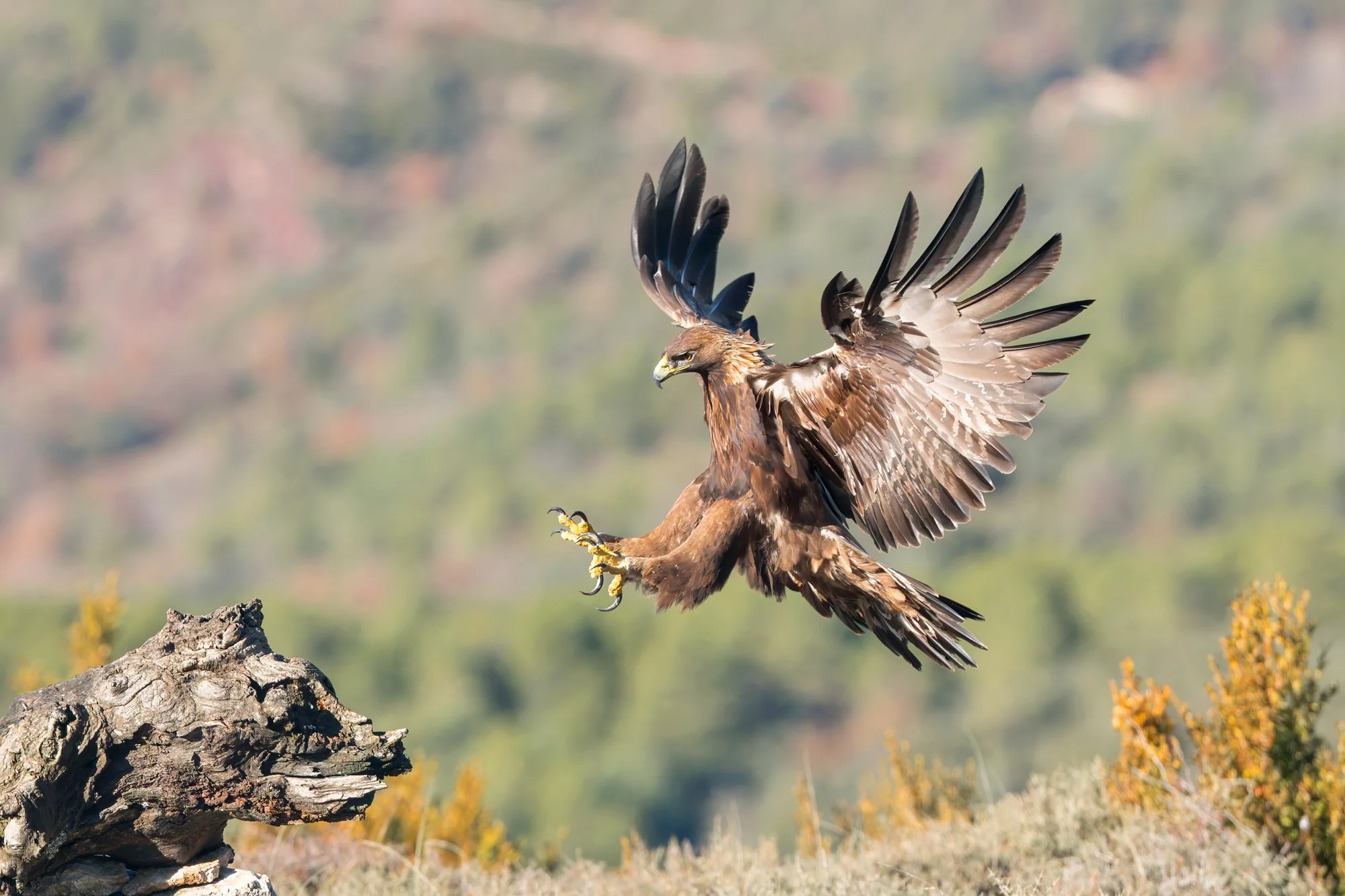
Golden Eagle
Aquila chrysaetos
Spanish: Águila real · Catalan: Àguila daurada
Wingspan1.8–2.3 m
Weight3–6.5 kg
Status (IUCN)Least Concern
In CataloniaAll year
About the bird
The great eagle of the northern hemisphere, named after the golden-buff feathers on its nape. Females are noticeably larger than males. It hunts rabbits, hares and partridges, and in winter readily feeds on carrion.
In Catalonia
Pairs hold large territories across the Pyrenees, the pre-Pyrenees and the interior ranges of Catalonia, usually nesting on cliffs.
From the hide
When food is scarce, eagles come down to feeding sites: the best chance anywhere to photograph one on the ground at close range.
04 / 14
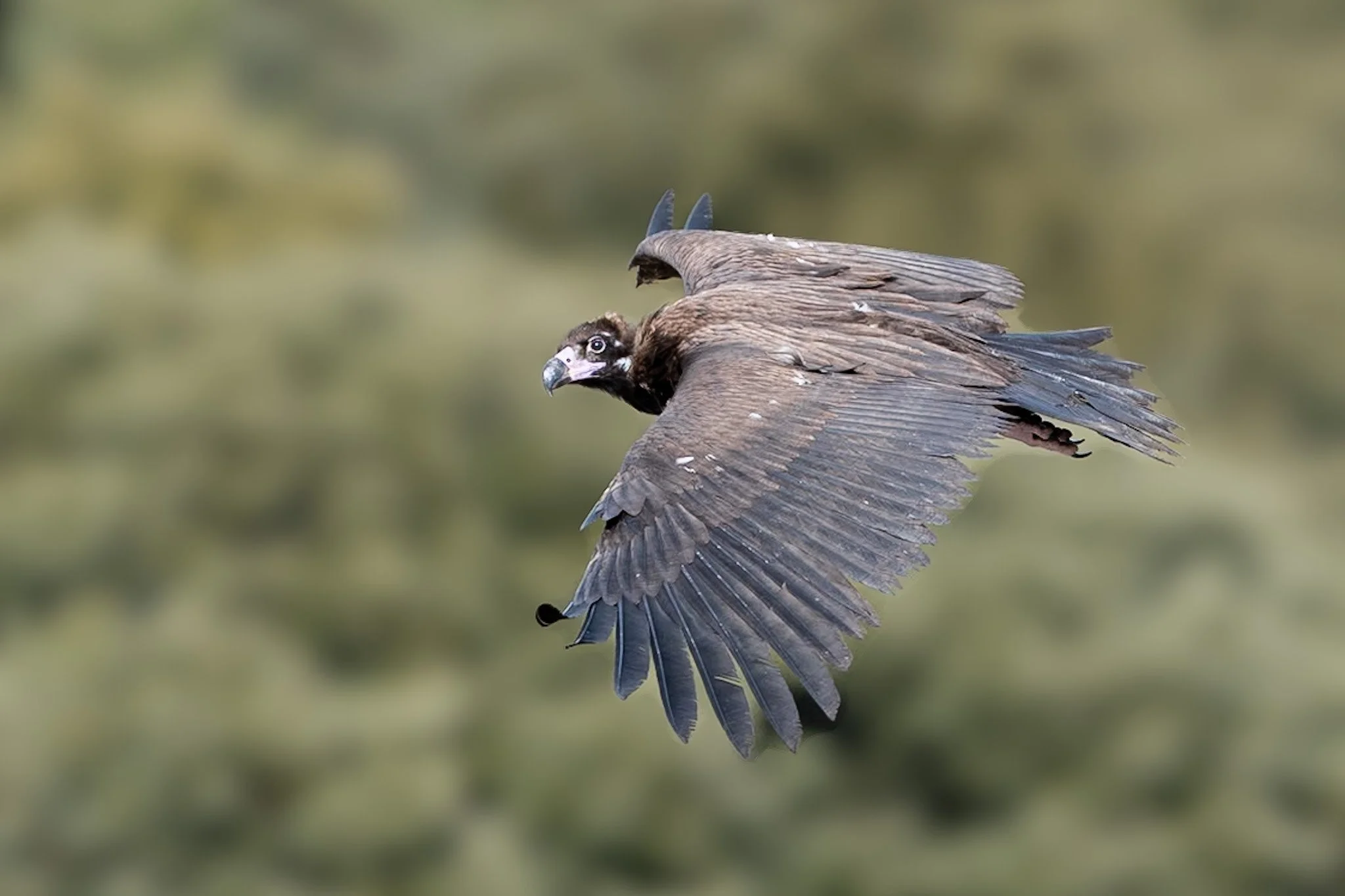
Cinereous Vulture
Aegypius monachus
Spanish: Buitre negro · Catalan: Voltor negre
Wingspan2.5–3.1 m
Weight7–12.5 kg
Status (IUCN)Near Threatened
In CataloniaAll year
About the bird
Europe's largest bird of prey and one of the heaviest flying birds on earth. Unlike the Griffon Vulture it nests in trees, on huge stick platforms, and its powerful bill lets it tear the toughest parts of a carcass.
In Catalonia
It disappeared from Catalonia about a century ago. A reintroduction project started in 2007 in Boumort and Alinyà, in the pre-Pyrenees, and today there is a breeding colony there again.
From the hide
Seeing one land among the griffons, dark and massive, is one of the highlights of any vulture session.


3 photos
05 / 14
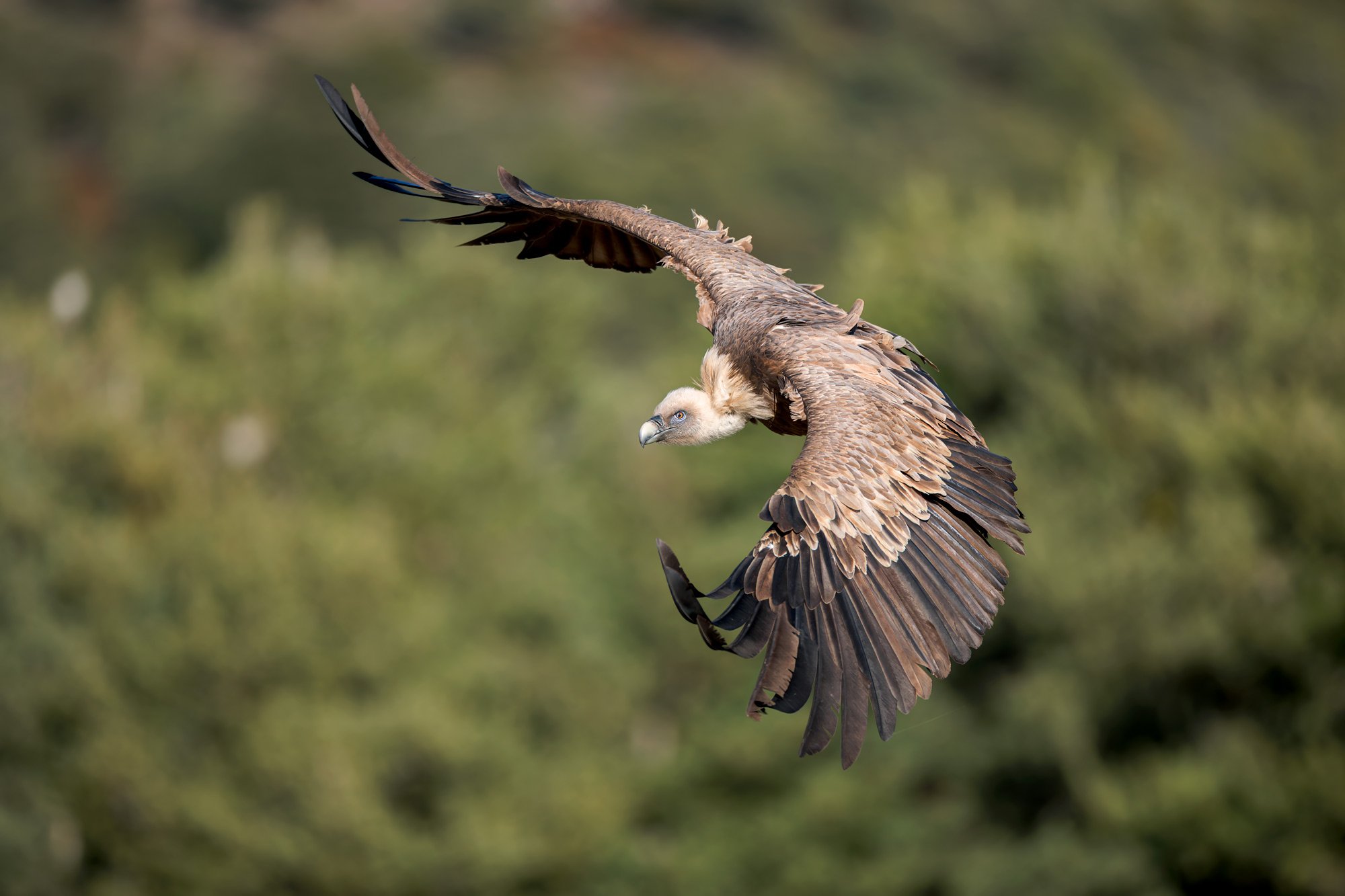
Griffon Vulture
Gyps fulvus
Spanish: Buitre leonado · Catalan: Voltor comú
Wingspan2.3–2.8 m
Weight6–11 kg
Status (IUCN)Least Concern
In CataloniaAll year
About the bird
A huge, sandy-brown vulture with a pale ruff and a long neck, built to soar for hours on thermals. Griffons breed in colonies on cliffs and find food by watching each other from the sky.
In Catalonia
Spain holds the vast majority of Europe's griffons. In Catalonia there are colonies in the Pyrenees, the pre-Pyrenees and the gorges of the interior.
From the hide
Arrivals, landings and noisy squabbles at the feeding site, with dozens of birds at once and wings that fill the frame.
06 / 14
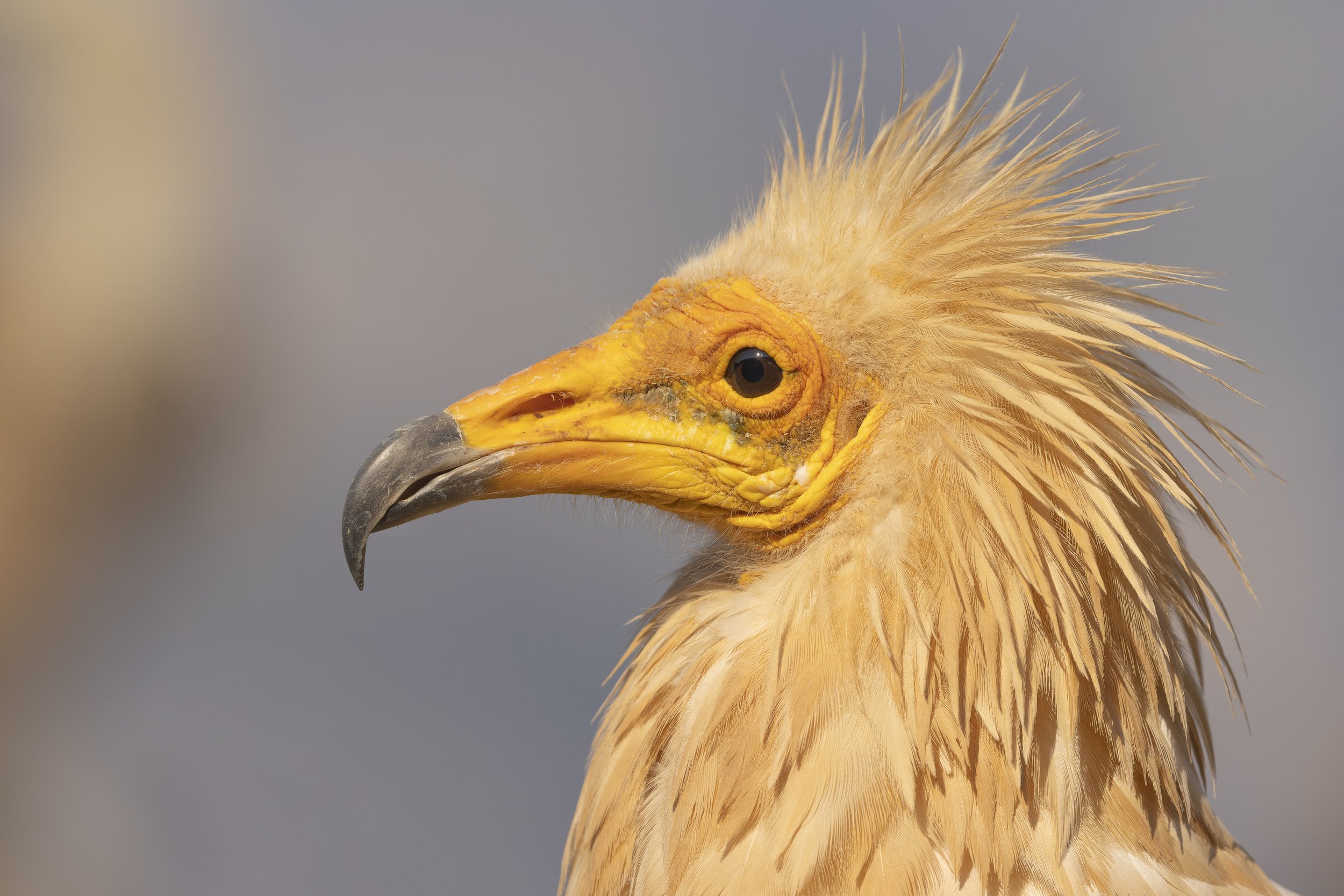
Egyptian Vulture
Neophron percnopterus
Spanish: Alimoche · Catalan: Aufrany
Wingspan1.55–1.7 m
Weight1.6–2.4 kg
Status (IUCN)Endangered
In CataloniaMarch to September
About the bird
The smallest European vulture: white plumage, black flight feathers and a bare yellow face. It is one of the few birds known to use tools, throwing stones to crack ostrich eggs in Africa.
In Catalonia
A summer visitor that winters in the Sahel. It returns to its cliff nests in the Pyrenees, the pre-Pyrenees and the interior ranges in March and leaves again in September.
From the hide
It shares the feeding sites with the larger vultures and waits its turn at the edges: elegant, and very photogenic in spring light.
07 / 14
Red Kite
Milvus milvus
Spanish: Milano real · Catalan: Milà reial
Wingspan1.4–1.7 m
Weight0.8–1.3 kg
Status (IUCN)Least Concern
In CataloniaAll year
About the bird
A graceful, rufous bird of prey with a deeply forked tail and pale wing panels, a master of slow, twisting flight. Almost the entire world population lives in Europe, and after years of decline it is recovering thanks to protection and reintroductions.
In Catalonia
A scarce breeder in Catalonia, it is more widespread in winter, when birds from central and northern Europe join the local ones.
From the hide
It visits the feeding sites alongside the vultures and often snatches food in flight, perfect for action shots.
08 / 14
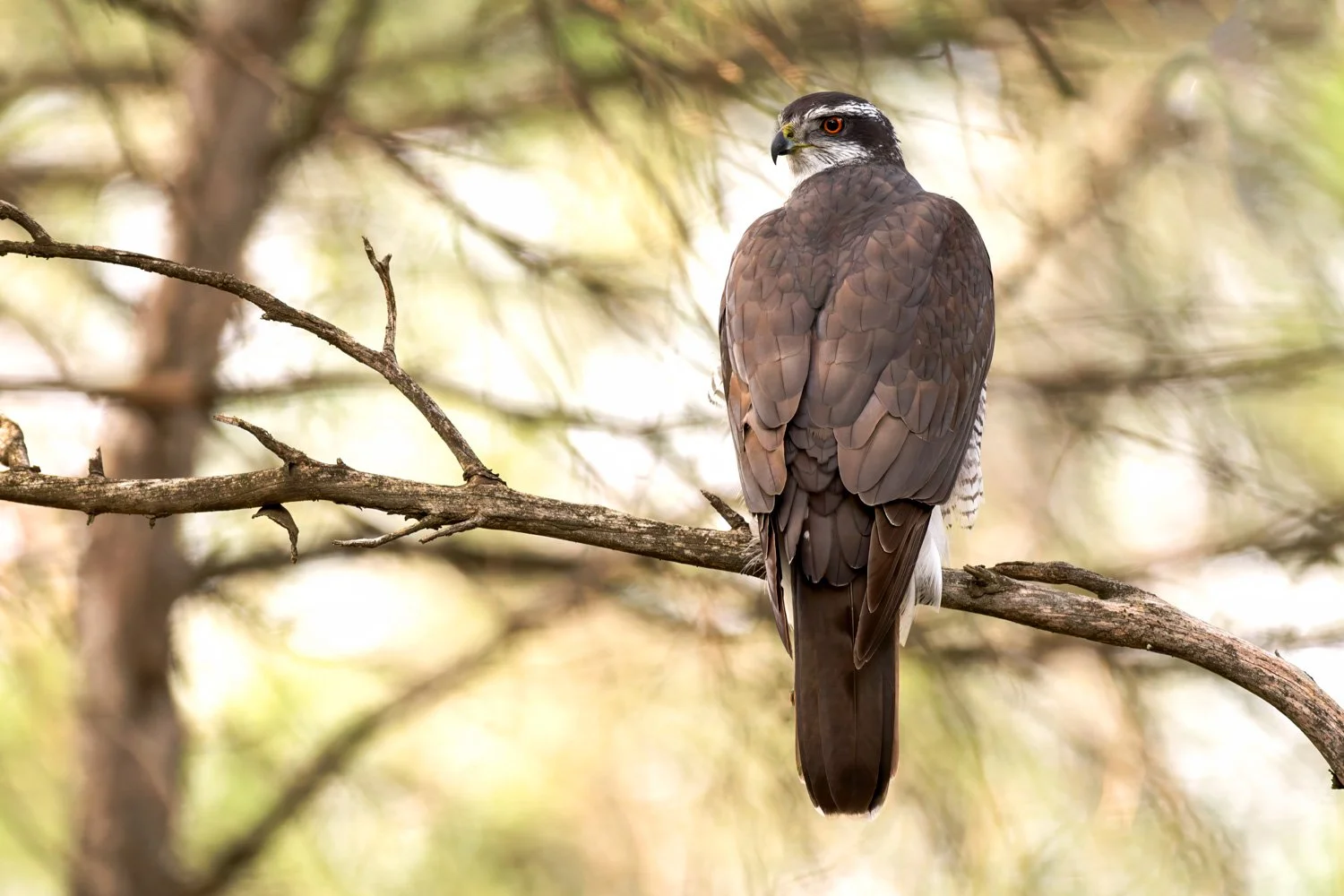
Eurasian Goshawk
Astur gentilis
Spanish: Azor común · Catalan: Astor
Wingspan0.9–1.25 m
Weight0.6–1.4 kg
Status (IUCN)Least Concern
In CataloniaAll year
About the bird
A powerful forest hunter with orange-red eyes, a bold white eyebrow and finely barred underparts. Females are much larger than males. It ambushes birds and mammals with short, explosive bursts between the trees.
In Catalonia
It lives in forests across Catalonia, from the Pyrenees to the coastal ranges, but its secretive habits mean it is rarely seen well.
From the hide
One of the hardest European birds of prey to photograph. From the hide it can stay in front of you for minutes.
09 / 14
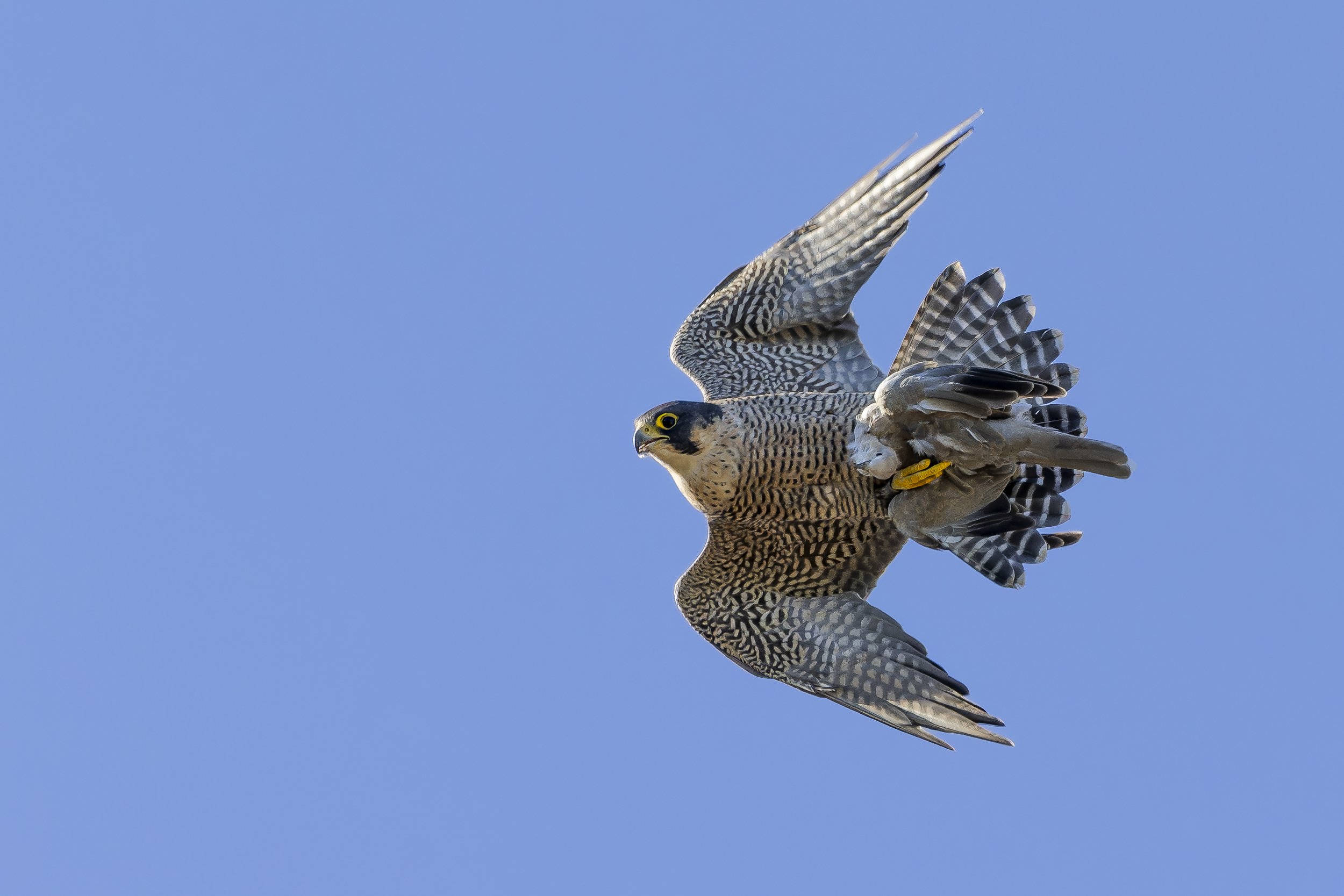
Peregrine Falcon
Falco peregrinus
Spanish: Halcón peregrino · Catalan: Falcó pelegrí
Wingspan0.8–1.2 m
Weight0.5–1.5 kg
Status (IUCN)Least Concern
In CataloniaAll year
About the bird
The fastest animal on earth: in a hunting dive it can exceed 300 km/h. It has a dark hood, a yellow eye-ring and barred underparts, and it hunts other birds in flight, mostly pigeons.
In Catalonia
It nests on cliffs throughout Catalonia and also on tall buildings, including in the centre of Barcelona.
From the hide
Perched birds at close range: plumage detail, eye contact and, with luck, a prey delivery.

3 photos
10 / 14
Eurasian Sparrowhawk
Accipiter nisus
Spanish: Gavilán común · Catalan: Esparver vulgar
Wingspan0.55–0.7 m
Weight0.1–0.35 kg
Status (IUCN)Least Concern
In CataloniaAll year
About the bird
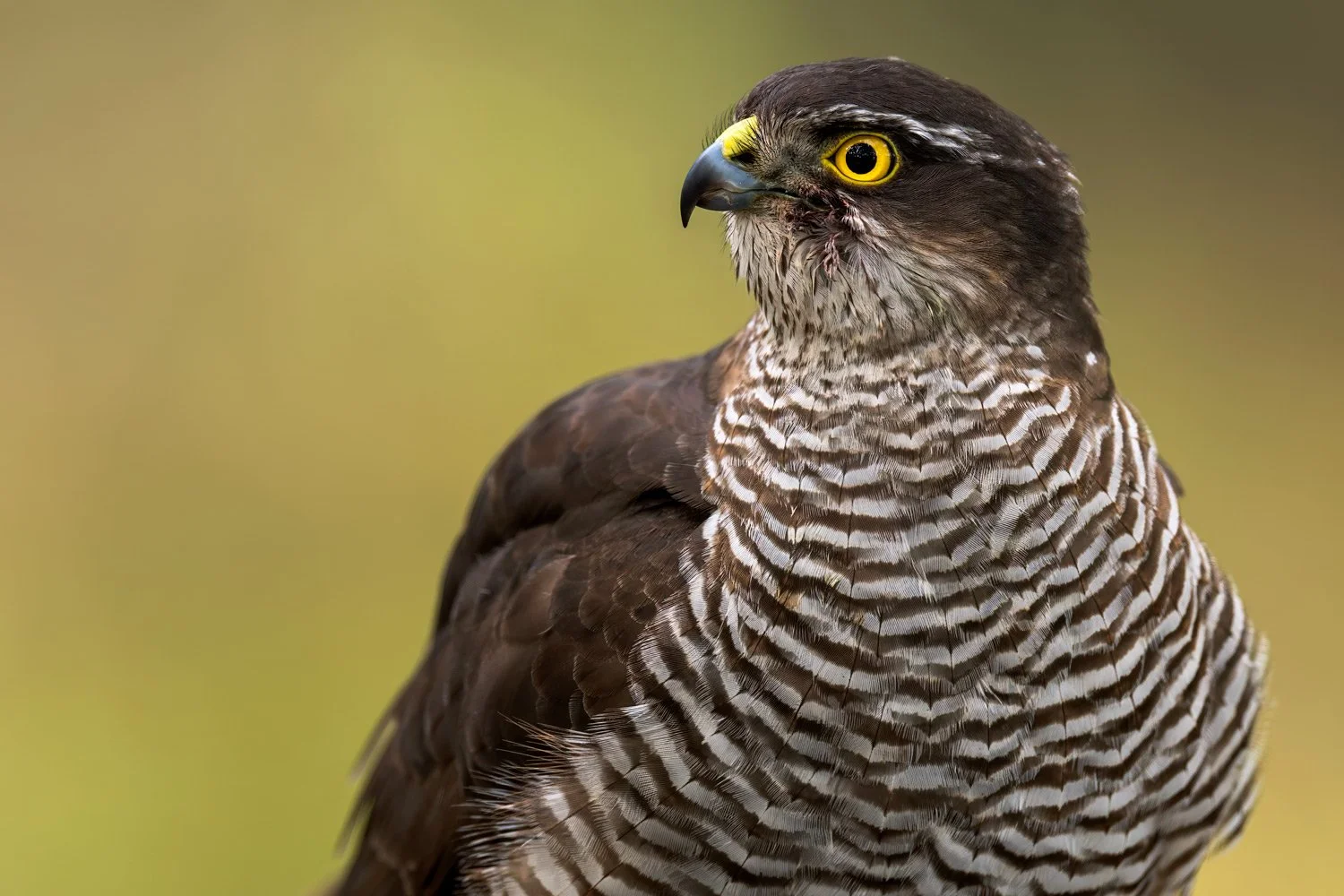
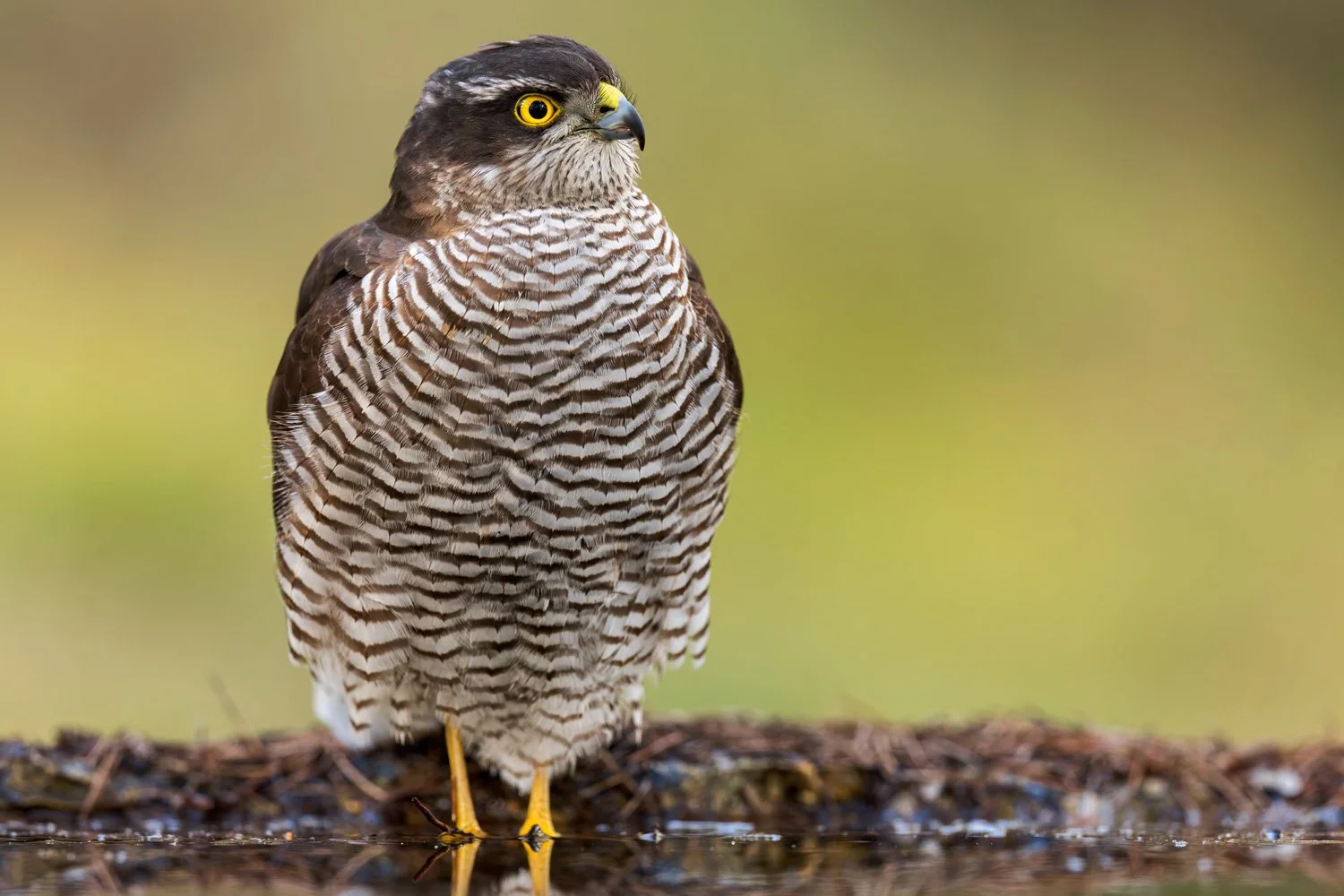
A small, agile hunter of birds with long legs and yellow eyes. Males have a blue-grey back and an orange-barred chest; females are larger and browner, with fine grey barring. It hunts small birds in surprise attacks.
In Catalonia
Common in woodland, parks and farmland across Catalonia, and more numerous in winter, when birds from the north arrive.
From the hide
The bathing-pool hides give close, eye-level portraits of both males and females.

11 / 14
Lesser Kestrel
Falco naumanni
Spanish: Cernícalo primilla · Catalan: Xoriguer petit
Wingspan0.58–0.72 m
Weight0.12–0.2 kg
Status (IUCN)Least Concern
In CataloniaSpring and summer
About the bird
A small, colonial falcon. Males have an unspotted chestnut back and a blue-grey head and tail; females are browner and barred. It feeds mainly on large insects such as grasshoppers and beetles, caught over open fields.
In Catalonia
A migrant that winters in Africa. It went extinct as a breeding bird in Catalonia in the 1980s and returned thanks to reintroduction work; today it breeds in colonies in the Lleida plains and in the Empordà, often in nest towers built for it.
From the hide
Colony hides let you photograph males and females bringing in insects, courting and displaying.

12 / 14
Montagu's Harrier
Circus pygargus
Spanish: Aguilucho cenizo · Catalan: Esparver cendrós
Wingspan1.0–1.2 m
Weight0.25–0.45 kg
Status (IUCN)Least Concern
In CataloniaApril to September
About the bird
The slimmest and most buoyant of the European harriers. Males are pale grey with black wingtips and a black bar across the upper wing; females are brown with a banded tail. It spends the winter in the Sahel.
In Catalonia
It nests on the ground in cereal fields, mainly in the Lleida plains, where conservation teams locate nests every year so they survive the harvest.
From the hide
Low, floating hunting flights over the crops and, in the breeding season, spectacular food passes between male and female.

13 / 14
Western Marsh Harrier
Circus aeruginosus
Spanish: Aguilucho lagunero · Catalan: Arpella vulgar
Wingspan1.15–1.4 m
Weight0.4–0.8 kg
Status (IUCN)Least Concern
In CataloniaAll year
About the bird
The largest European harrier. It quarters reedbeds in slow, low flight with its wings held in a shallow V. Adult males are tricoloured, brown, grey and black, while females are dark chocolate with a creamy head.
In Catalonia
It breeds in wetlands such as the Ebro Delta and the Aiguamolls de l'Empordà, and more birds arrive from the north in winter.
From the hide
Low passes over water and reeds, with reflections and soft wetland light.
14 / 14
Common Buzzard
Buteo buteo
Spanish: Busardo ratonero · Catalan: Aligot comú
Wingspan1.1–1.3 m
Weight0.5–1.2 kg
Status (IUCN)Least Concern
In CataloniaAll year
About the bird
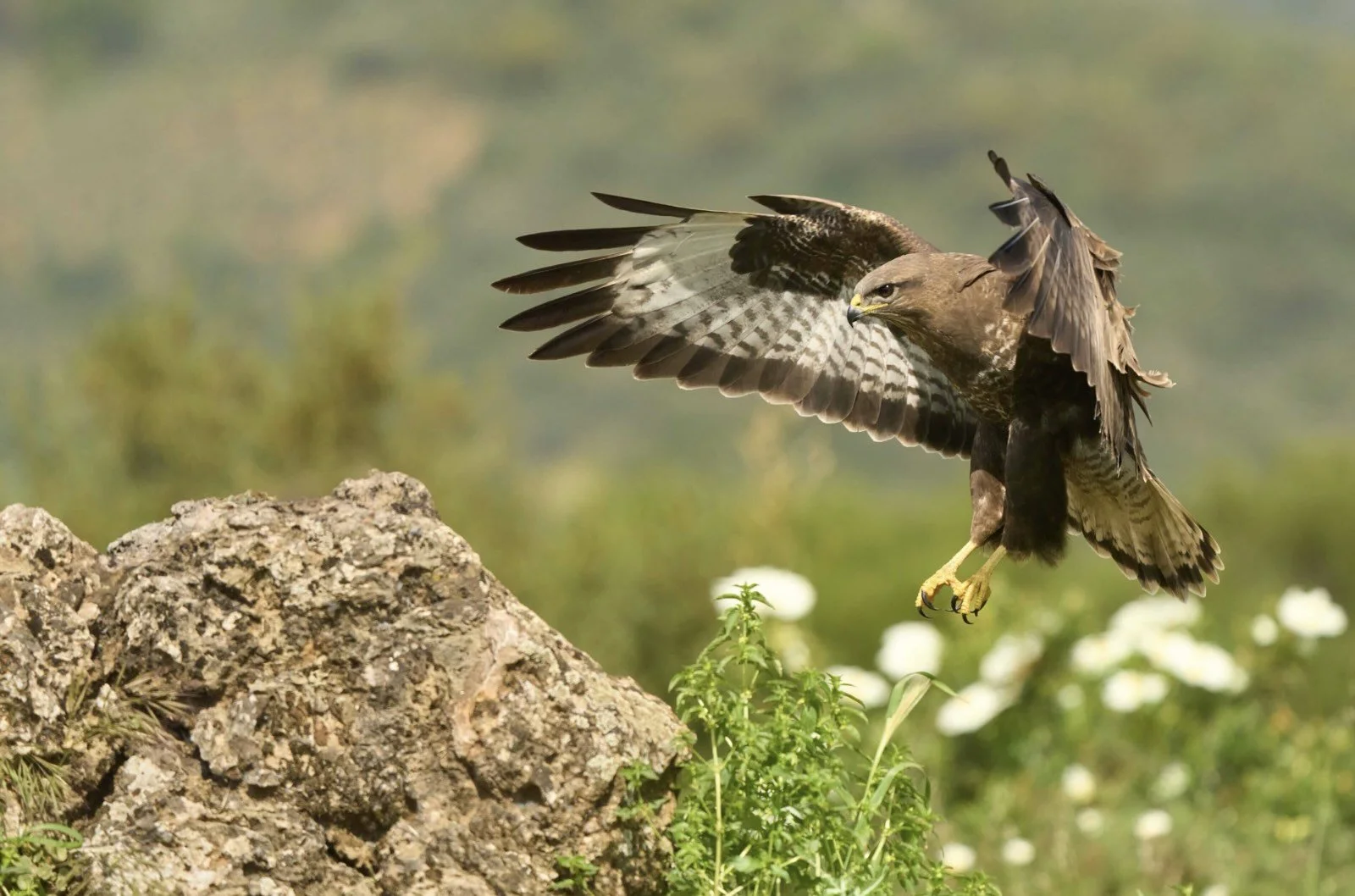
One of Europe's most widespread birds of prey, and one of the most variable: individuals range from almost white to dark brown. It hunts small mammals from a perch or while soaring.
In Catalonia
Common across Catalonia all year, from farmland to mountain forests, with more birds in winter.
From the hide
Approachable perched birds and every plumage you can imagine: a great species for working on light and composition.
Everything around the hide, taken care of
- Morning and afternoon hide sessions, planned around the birds you choose
- A private photography guide with you in the field
- All hide fees and bookings
- A briefing before every session: light, settings and what the bird is likely to do
- Accommodation and transport from Barcelona, arranged for you on request
Not included: flights, travel insurance and personal expenses.
De
€400
A single morning, a long weekend or a full week. Tell us which birds you'd like to photograph and we'll send you a proposal made for you.
Plan your trip
Before you ask
How do I plan my trip?
Tell us which birds you'd like to photograph, when you're travelling and how many photographers you are. We'll put together the best combination of hides for the season and the light, and send you a proposal.
Are all the birds available all year?
Most of them are. Three are summer visitors that spend the winter in Africa: the Egyptian Vulture (March to September), Montagu's Harrier (April to September) and the Lesser Kestrel (spring and summer). We plan each trip around the season you travel in.
Can I photograph the same bird more than once?
Of course. Many photographers come back to the Bearded Vulture hide more than once, because no two sessions are the same.
What lens do I need?
A telephoto in the 400 to 600 mm range covers almost every hide. For the vulture sessions a shorter zoom is useful too, as the birds often come very close. Once we know your plan, we'll send you a gear list.
Do I need experience in hides?
Not at all. We'll explain how each hide works before you go in: when to arrive, how to set up and how to stay quiet for hours without noticing the time go by.
Can I come with a friend or partner?
Yes. The sessions are private, so you can come alone or with whoever you like. Tell us how many you are when you send your request.
Which birds do you want to wake up for?
Tell us what you'd like to photograph and we'll take care of the rest.
Plan your trip
Plan your trip
Tell us which birds you're interested in, your dates and how many photographers you are. We'll check availability and come back to you with a proposal.