ATLANTIC ODYSSEY 2027
ATLANTIC ODYSSEY 2027
Expedition Cruise Across the Atlantic Ocean
From Ushuaia to Cape Verde
Expedition dates:
04 April – 07 May, 2027
Duration: 33 nights
Ship: Plancius
Embark / disembark:
Ushuaia / Cape Verde
Cabins & Prices:
- Quadruple cabin: 11.300 € 10.170 €
- Twin porthole: 14.400 € 12.960 €
- Twin window: 14.950 € 13.455 €
- Twin deluxe: 16.550 € 14.895 €
- Superior cabin: 17.400 € 15.660 €
A Journey to the Edge of Nature
The Atlantic Odyssey is a long-distance sea expedition from Ushuaia to Cape Verde, crossing some of the most productive pelagic waters of the South and North Atlantic.
Designed for naturalists, birders and wildlife photographers, this pelagic expedition focuses on observation at sea. Seabirds, marine mammals, flying fish, remote islands and open-ocean landscapes define the journey, with daily bird photography guidance and onboard workshops provided by Warbler Tours.
Photography focus
This expedition is designed for photographers who value time, observation and intention over rushing between sightings. The group is paced for all levels, with daily guidance shaped by light, wind, sea state and wildlife movement, helping you build a coherent oceanic portfolio.
Throughout the cruise, Rafael Armada, fine art specialist, bird photographer and conservation storyteller, will lead his exclusive seabird and flying fish photography workshop, expanding the focus beyond seabirds to explore motion, abstraction and fleeting moments at the air–water boundary
— an experience available exclusively to Warbler Tours participants and included in the regular fee.
The itinerary
-
Our adventure begins at the edge of the Earth: Ushuaia, Argentina, often considered the southernmost city in the world, located at the southern tip of South America. In the afternoon, we set sail from this picturesque town on Tierra del Fuego—nicknamed "The End of the World"—and embark on a scenic journey through the Beagle Channel, surrounded by dramatic mountain views, as we cruise through the evening.
PLEASE NOTE: This itinerary is for guidance only. Programs may vary depending on ice, weather, and wildlife conditions. Landings are subject to site availabilities, permissions, and environmental concerns per IAATO regulations. Official sailing plans and landing slots are scheduled with IAATO prior to the start of the season, but the expedition leader determines the final plan. Flexibility is paramount for expedition cruises. The average cruising speed for our vessel is 10.5 knots.
-
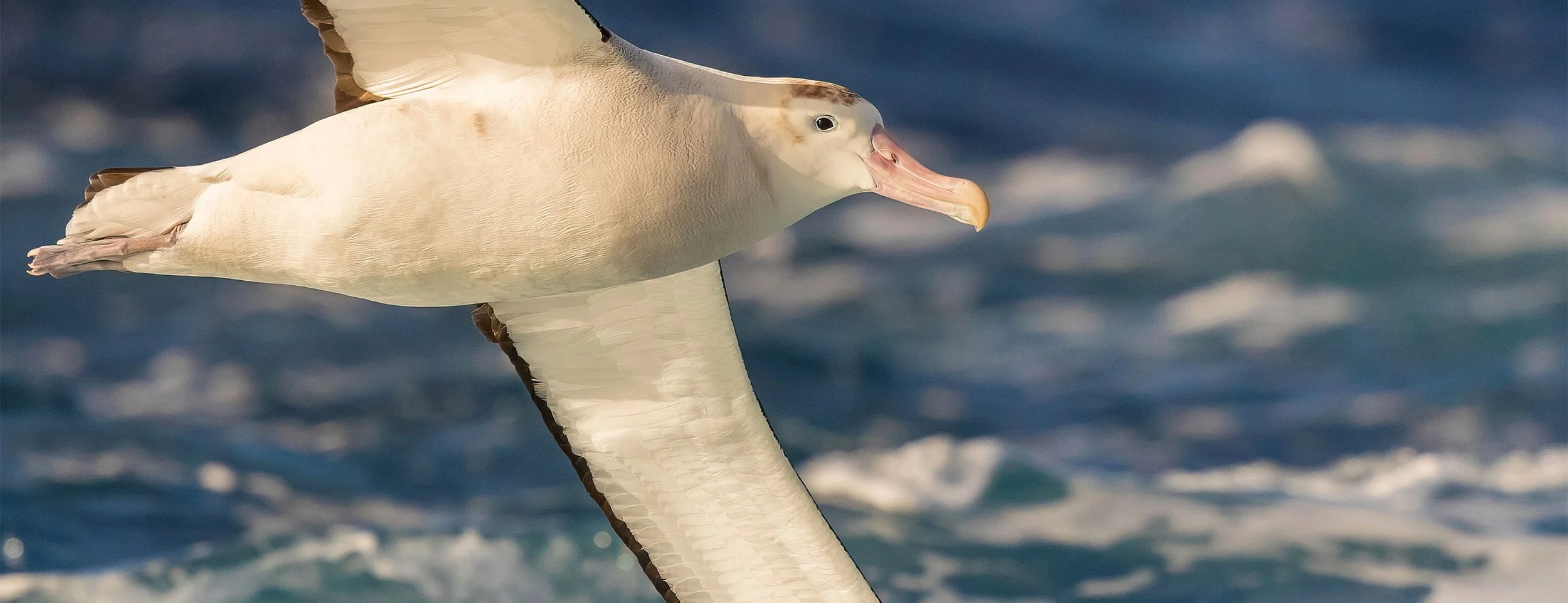
We cross the Antarctic Convergence, where cold waters flowing north meet the warmer sub-Antarctic currents, and enter the nutrient-rich circum-Antarctic upwelling zone. This shift not only changes the marine life but also brings new birdlife into view. We’ll spot a variety of seabirds including species like Pintado Petrel, Blue Petrel, Soft-plumaged Petrel, White-chinned Petrels, Wandering Albatross, Black-browed Albatross, Grey-headed Albatross, Sooty Albatross, Antarctic Fulmars, Slender-billed Prions and Antarctic Prions.
-
During our time in South Georgia, we will aim to visit some of the world’s largest King Penguin colonies. At this time of year, we have the chance of witnessing thousands of penguins. The rookeries are often teeming with life, as penguins move back and forth between the beach and their colony. Our landings will also be accompanied by other wildlife, including Snowy Sheathbills, Sea Lions, and Elephant Seals.
Salisbury Plain, St. Andrews Bay & Gold Harbour:
These locations are home to some of the largest King Penguin colonies in the world. In addition we will encounter elephant seals and playful fur seal pups frolicking in the surf.Grytviken:
At this historic, abandoned whaling station, we’ll find ourselves surrounded by the unique sight of King Penguins strolling through the streets, while elephant seals relax nearby. We’ll explore the South Georgia Museum and Shackleton’s grave. For a truly memorable moment, we’ll also visit the Post Office, where you can send a postcard from one of the most remote corners of the world to your loved ones.Cooper Bay:
Known for its excellent Zodiac cruises, Cooper Bay is home to a rookery of Macaroni Penguins. King Penguins, Yellow-billed Pintails, and Giant Petrels might also appear.Moltke Harbour:
Located in Royal Bay, this location provides us the opportunity to observe another large King Penguin colony, making it a highlight of our adventure.
-
We set sail again, on a course often aided by a pleasant tailwind through the westerlies, crossing both sides of the Antarctic Convergence. Along the way, we’ll encounter a diverse array of seabirds, including a mix of Antarctic and Subantarctic species. While many of the species seen earlier remain with us, this part of the journey offers new sightings. We’re likely to see Storm Petrels such as White-bellied, Black-bellied, and Grey-backed, Fairy Prions, and various petrels, including Kerguelen, Grey, Atlantic, and Great-winged. We will also have the possibility of spotting up to eight species of albatross, from the majestic Wandering Albatross to the Tristan, Grey-headed, and Atlantic Yellow-nosed Albatrosses.
-
Gough Island, a UNESCO World Heritage Site, serves as a haven for millions of breeding seabirds. While landings are prohibited, weather permitting, we plan to embark on Zodiac cruises along its rugged coastline. During the cruise, we’ll search for the Northern Rockhopper Penguins, the endemic Gough Moorhen and Gough Bunting, as well as the local form of Subantarctic Fur Seal.
-
Our journey brings us to the remote Tristan da Cunha island, often considered the world’s most isolated inhabited place. We plan to visit the settlement of Edinburgh on Tristan da Cunha, with two reserve days in case of adverse weather. From the boat, we expect to see various species of Albatross, Petrels, Storm Petrels, Skuas, and Terns, while the island’s interior offers an opportunity to spot the endemic Tristan Thrush. Afterward, we’ll relax in the local pub, perhaps enjoying a beer and, why not, a friendly game of darts.
If conditions permit, we will aim to visit Nightingale Island, home of large colonies of Great Shearwaters. We will also see Atlantic Yellow-nosed Albatrosses and Northern Rockhopper Penguins. We will try to land on the mythic Inaccessible Island, where we could see the endemic and flightless Inaccessible Rail.
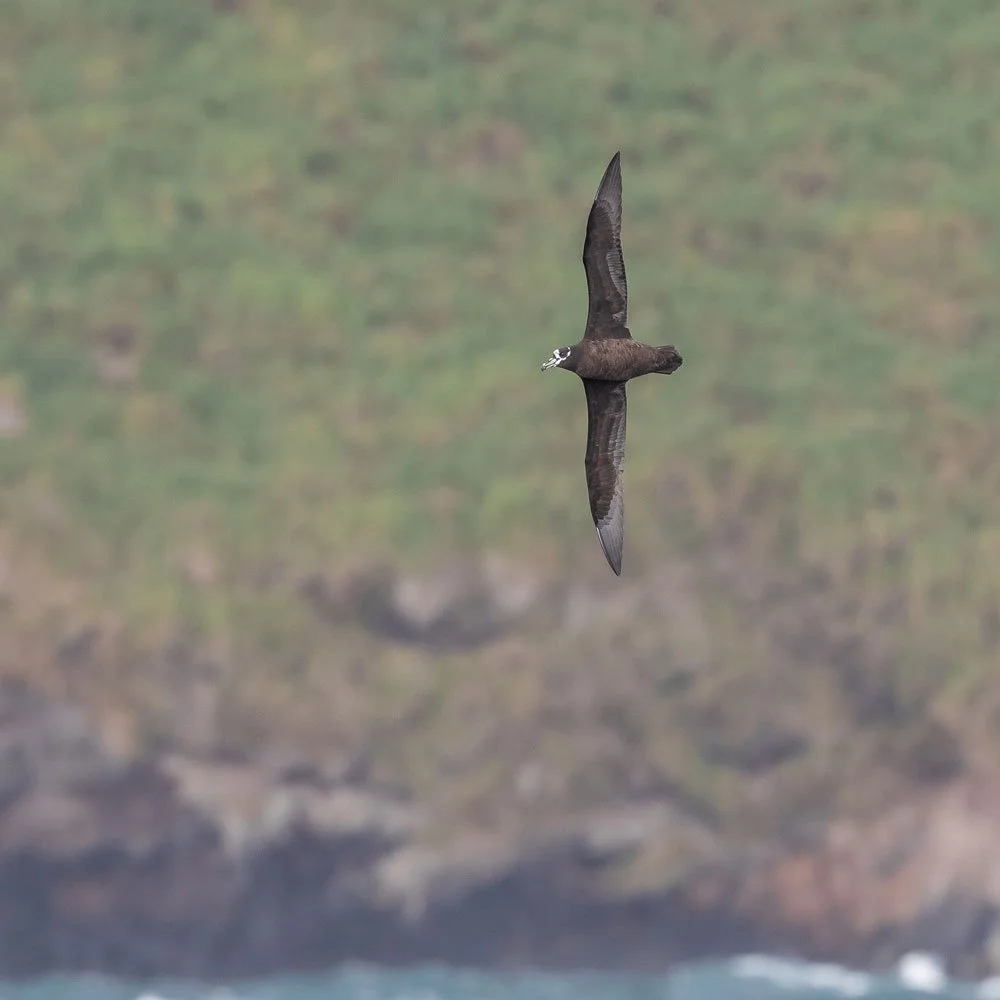
From Gough Island onward, we’ll have the chance to admire the stunning Spectacled Petrels, often regarded by birders as the most beautiful of their kind. The entire global population of this seabird, of just around 30,000 pairs, breed exclusively on the high plateau of Inaccessible Island.
NOTE: Two days are reserved at Tristan da Cunha in case of bad weather, but please remember that nature determines our itineraries here: Since beginning the Atlantic Odyssey cruise in 1998, adverse weather led to the cancellation of 35% of Tristan da Cunha landings. If we have to divert for safety reasons, we will find good alternatives.
-
As we sail north from Tristan da Cunha, the days will grow warmer and the seas calmer, marking our transition into subtropical waters. We’ll gradually leave behind the southern seabirds and new species will begin to appear, such as Band-rumped Storm Petrels and Bulwer’s Petrels.
Playful dolphins may join us along the way, and we’ll definitely need to keep an eye on the surface, we might spot flying fish gliding above the waves.
-
On our visit to Saint Helena, we’ll experience the island's perfect balance of wildlife, and history. The island is home to the endemic and endangered Wirebird, or St. Helena Plover which we will likely spot in the fields at the center of the island. The coastline is alive with nests of White Terns, while Red-billed Tropicbirds and noddies often circle around our vessel. For those interested in history, a visit to Longwood House, where Napoleon spent his final years, is a must for its historical significance. If you're looking for adventure, we can take short hikes, snorkel in the shallows, or embark on a boat trip to explore the seabird colonies and possibly encounter dolphins up close.
➢ You have the option to disembark and fly back home from Jamestown Airport in Saint Helena (HLE). Please contact us at warblertours@gmail.com for details and pricing of the short itinerary.
➢ For those continuing on to Cape Verde, the ship will set sail in the evening of Day 23.
-
As we leave St. Helena behind, our ship sets course for the Mid-Atlantic Ridge, an underwater mountain range stretching from the Arctic to the southern tip of Africa. The journey ahead promises to be full of excitement as we begin to encounter Cory’s Shearwaters and Sooty Terns. When night falls, our expert expedition guides from Oceanwide, will invite us to the aft deck for a stargazing experience like no other. Together, we’ll point out the many wonders of the equatorial sky. Weather permitting, the starry sky will be visible with the naked eye, or we can use binoculars to spot even more details in this incredible celestial showcase. As we sail deeper into the Atlantic, we’ll soon witness the highest density of flying fish of the entire trip.
During this part of our journey, we’ll experience the highest density of flying fish of our entire trip. We’ll certainly make it a priority to capture this incredible spectacle in as much detail as possible.
-
Ascension Island is a volcanic landmass with a dry environment and a lush, verdant peak known as Green Mountain. We'll cruise offshore to the remarkable Boatswain Bird Island. This natural stack is home to thousands of Ascension Frigatebirds, and we'll also have the chance to see Red-footed, Brown, and Masked Boobies, along with White-tailed Tropicbirds, all competing for prime nesting sites.
-
As we sail into the northern hemisphere, Arctic Terns and Long-tailed Skuas will join us on their northward spring migration. The seabird sightings will become more varied, with Cape Verde Shearwaters, White-faced Storm-Petrel and luckily Cape Verde Storm Petrels. We anticipate the exciting moment when we cross the Equator—who knows, we might even have a chance to meet King Neptune! If the weather is on our side, we’ll have another opportunity to enjoy stargazing from the deck, where we can observe the Polar Star making its appearance on the northern horizon.
-
We will sail by Ilhéus do Rombo and Sao Filipe on Fogo Island, offering a chance to spot some of the Western Palearctic species. An excellent opportunity to observe diverse bird species and enjoy the scenic views of the island from the water.
-
We’ll arrive in Praia, the capital of Santiago Island in Cape Verde, with disembarkation planned for 18:00. While no lunch will be served on this day, we can still relax onboard or safely store our luggage until it’s time to depart. We could join for an optional tour to Praia and its surroundings to visit Cidade Velha, a UNESCO World Heritage Site rich in history. Highlights include the imposing hillside fortress built to ward off English raiders, the oldest Christian church in the tropics, and the sobering slave whipping post in the main square. For birding, there are opportunities to venture out in search of Cape Verde’s endemic bird species before flying back home.
In Cape Verde, we will conclude this unforgettable adventure.




What makes this trip different…
The Atlantic Odyssey isn’t just a voyage; it’s a passage to some of Earth’s most extraordinary corners. We’ll traverse legendary waters and reach remote islands visited by only a handful of people, including South Georgia, Tristan da Cunha and St. Helena.
Aboard a comfortable Expedition Cruise Ship, we will see how the horizon reveals islands teeming with thousands of penguins, albatrosses gliding just above the waves, whales and dolphins racing alongside the bow, and the vast expanse of the Atlantic Ocean stretching beyond. The journey begins in the cold waters of the South Atlantic and transitions to the warm tropical seas of Cape Verde.
With Warbler Tours, this expedition also becomes a photographic journey, suitable for all skill levels
—A masterclass in observation and mindset, designed for those who see nature as their muse.
Cabins & Prices
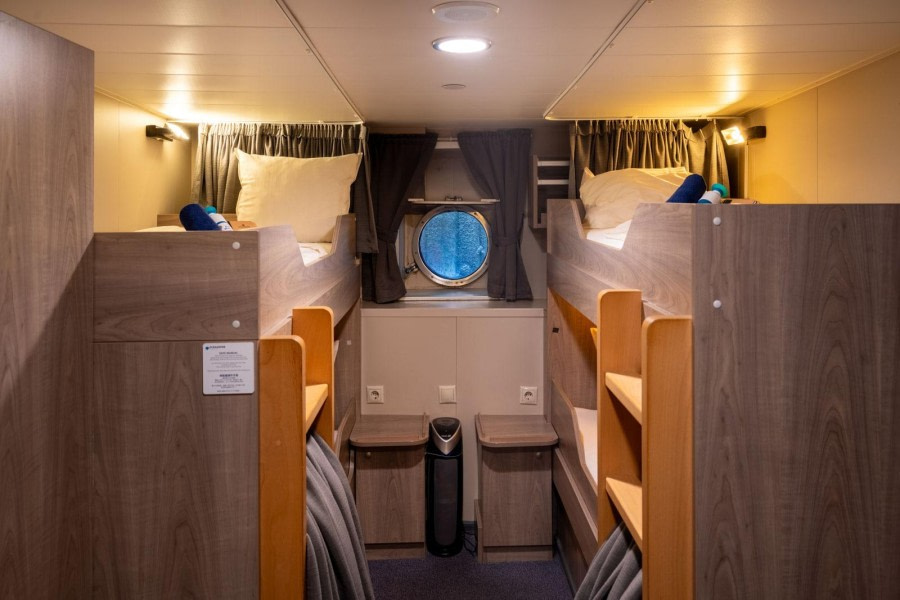
Quadruple Porthole
Cabins available- Cabin size 12 m²
- 1 porthole
- Upper & lower berths
- Private shower & toilet
- Desk & chair
- Flatscreen TV
- Telephone & WiFi (supplemented)
- Hair dryer
- Safe deposit box & Storage
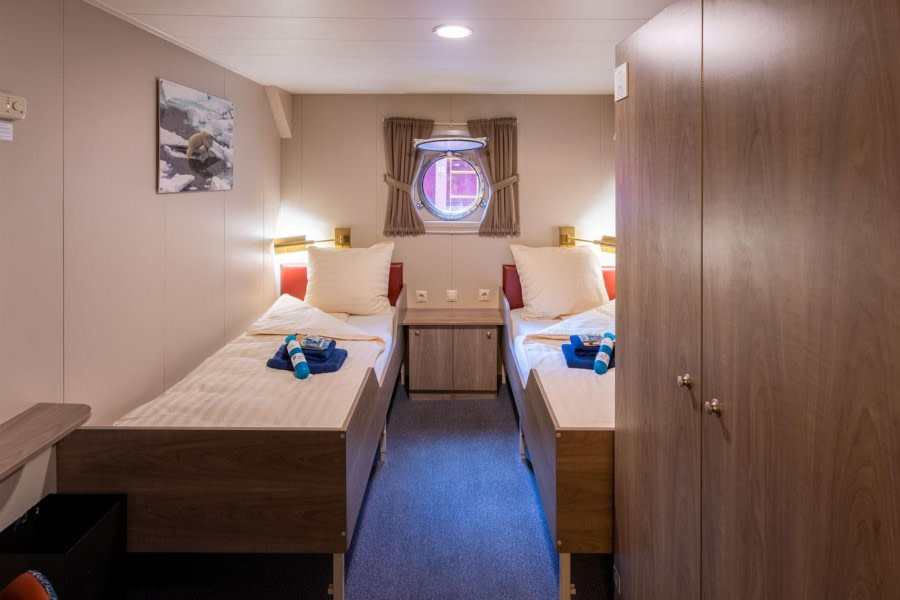
Twin Porthole
Cabins available- Cabin size 12 m²
- 1 porthole
- 2 lower berths
- Private shower & toilet
- Desk & chair
- Flatscreen TV
- Telephone & WiFi (supplemented)
- Hair dryer
- Safe deposit box & Ample storage space
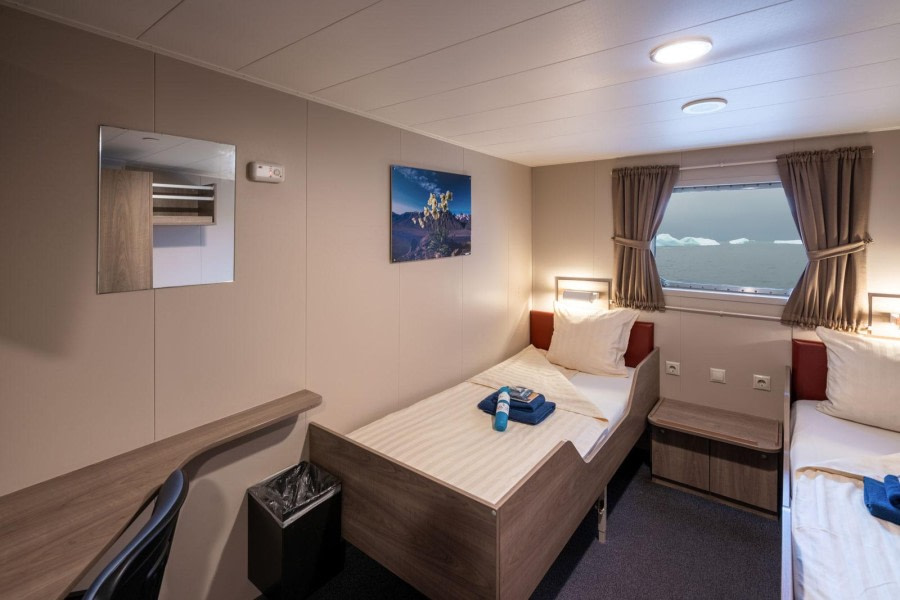
Twin Window
Cabins available- Cabin size between 12.5 m² and 13.5 m²
- 1 window
- 2 lower berths
- Private shower & toilet
- Desk & chair
- Flatscreen TV
- Telephone & WiFi (supplemented)
- Hair dryer
- Safe deposit box & Ample storage space
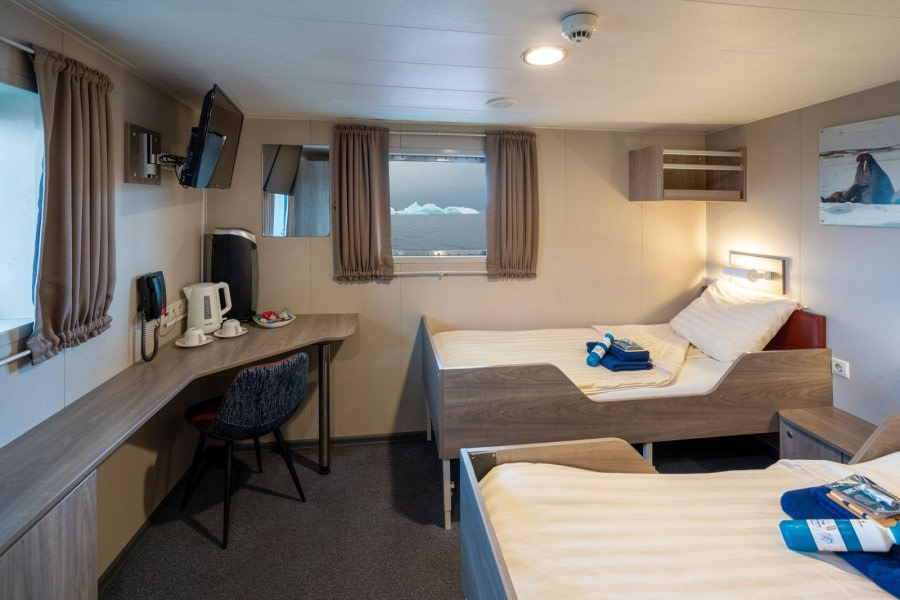
Twin Deluxe
Cabins available- Cabin size 13.5 m²
- 2 windows
- 2 lower berths
- Private shower & toilet
- Desk & chair
- Flatscreen TV
- Telephone & WiFi (supplemented)
- Hair dryer
- Safe deposit box & Ample storage space
- Corner cabin, more spacious than standard twin cabins
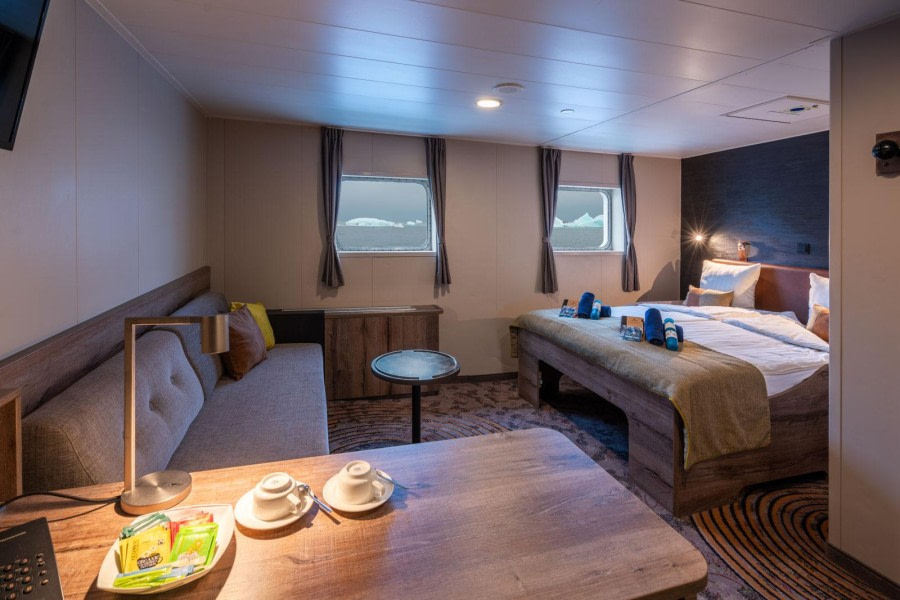
Superior Cabin
Cabins available- Cabin size between 21 m² and 23 m²
- 2 windows
- 1 double bed
- 1 sofa bed
- Private shower & toilet
- Desk & chair
- Flatscreen TV
- Telephone & WiFi (supplemented)
- Refrigerator
- Coffee & tea maker
- Hair dryer
- Safe deposit box & Ample storage space
What’s included
Professional birding and photography guiding
Voyage aboard the Plancius vessel as indicated in the itinerary
All meals throughout the voyage aboard the ship including snacks, coffee and tea.
All shore excursions and activities throughout the voyage by Zodiac.
Program of lectures by noted naturalists and leadership by experienced expedition staff.
Free use of rubber boots and snowshoes.
Luggage transfer from pick-up point to the vessel on the day of embarkation, in Ushuaia.
All miscellaneous service taxes and port charges throughout the programme.
Comprehensive pre-departure material.
What’s not included
International or domestic flights.
Pre- and post- land arrangements.
Passport and visa expenses.
Government arrival and departure taxes.
Meals ashore.
Baggage, cancellation and personal insurance (which is strongly recommended).
Excess baggage charges and all items of a personal nature such as laundry, bar, beverage charges and telecommunication charges.
The customary gratuity at the end of the voyages for stewards and other service personnel aboard.
Interested in this expedition?
We handle the booking and help you choose the best cabin option for you.
You can fill in the form, or simply write to us at warblertours@gmail.com to plan your trip.